Optical Hardware 1.25″ t-adapter and t-ring

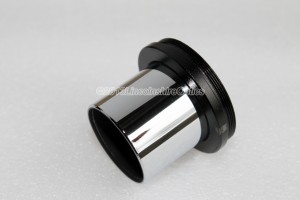
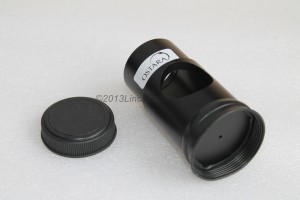
The Optical hardware 1.25″ t-adapter allows prime focus photography with telescopes that accept 1.25″ accessories such as eyepieces.

IMG_4450

You will need an additional t-ring for your own make of SLR or DSLR camera body. To use, simply connect the t-ring to the t-adapter, and connect to your camera as you would a camera lens. You can not fix to your telescope.

Due to infinity focus issues, to get infinity focus on some newtonian telescopes you may need to use with a barlow, move the primary mirror up the tube, or use a low profile focuser to get sharp focus.

The adapter is of a strong metal construction, and is threaded to accept 1.25″ filters

The image shows a t-ring connected to the adapter

A great range of t-adapters and t-rings can be purchased from Northern Optics

Posted in Accessories | Tagged , | Comments Off on Optical Hardware 1.25″ t-adapter and t-ring

Ostara moon / Skyglow filter

IMG_3187

It has been mentioned on one forum that Ostara filters have “soft” thread , and do not screw in to eyepieces very well.
I can assure you this is not the case. I have sold well over 1000 of these, with no issues from any of my buyers.
I check them regularly , and never found any problem.

It is more likely , that the issue may be with some inferior eyepieces that do not have strong inner thread, or the person using the filter has simply cross threaded

Ostara filters can be bought from Northern Optics

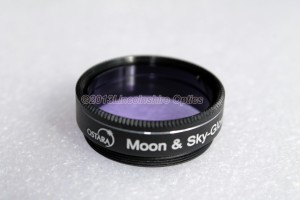
The Ostara Moon / Skyglow filter does what it says on the tin. It reduces some light reaching the eye, so cutting glare and improving contrast. The filters also helps reduce sodium light (street lights) for better deep sky observations.

If you have no light pollution, but simply want a good Moon filter, go for the Ostara Crystalview filter. This version gives a more neutral colour than the Moon / Skyglow

Posted in Accessories | Tagged , , | Comments Off on Ostara moon / Skyglow filter

Skywatcher UWA-70 8mm . 1.25″ / 2″ eyepiece

IMG_4525

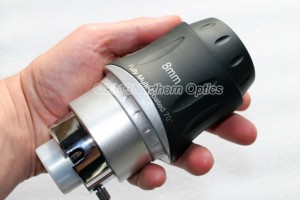
The Skywatcher UWA-70 , 8mm eyepiece has a dual use 1.25″ / 2″ barrel size. Features a 6-element fully multi-coated optical lens assembly.

Tough rubber covering for added protection. Twist eye cup, and long eye relief. Superb internal baffling cuts out most inner reflection that you may get from street / house lights or bright objects like the Moon.

Click here to buy from Northern Optics

Posted in Eyepieces | Tagged , | Comments Off on Skywatcher UWA-70 8mm . 1.25″ / 2″ eyepiece

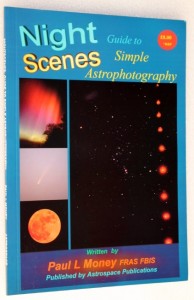
Night Scenes guide to simple astrophotography. By Paul Money FRAS FBIS

IMG_4522

Ideal and simple to read introduction to SLR astrophotography
Full of helpful hints on how to capture the wonders of the heavens just using an SLR camera and various lenses

55 page paper back

illustrations and/or example photographs on every page

Chapters
1; Basics about the night sky
2; Cameras , lenses, tripods etc
3; How to shoot star trails
4; But I want stars as stars !
5; Capturing Planets and conjunctions
6; Our nearest neighbour, the Moon
7; Comets and meteors
8; Aurorae, Noctilucent clouds and Halos
9; Artificial satellites and Zodical light
10; DSO,s and processing
11; Nightscapes + mistakes can be fun too !

Click here to buy for just £8.00 including UK delivery

Posted in Accessories | Tagged | Comments Off on Night Scenes guide to simple astrophotography. By Paul Money FRAS FBIS

Optical Hardware 1.25″ t-adapter

IMG_4450

Optical Hardware 1.25″ t-adapter.
Very strong metal construction
Attractive silver finish on the outside, and blackened on the inside to help reduce reflection.
Threaded to accept our 1.25″ telescope filters and t-rings (not included)

Available to buy from Northern Optics

To use, simply screw on a t-ring for your specific SLR camera body, and then place in your eyepiece holder for prime focus photography (no eyepiece used) Please note that you may need to use in conjunction with a barlow lens to achieve infinity focus with some newtonian reflectors.
Comes retail packaged

Posted in Accessories | Tagged , | Comments Off on Optical Hardware 1.25″ t-adapter

Ostara short tube collimating eyepiece

IMG_4447

Ostara short tube collimating eyepiece for Newtonian reflectors

Ostara are fast becoming a well known and respected brand when it comes to astronomical accessories, binoculars and telescopes.
Straight out the box, you will be aware how solid and well built this collimating eyepiece is.

Unlike laser collimators, the cheshire design can be used to align both primary and secondary mirrors.
Simply line up the cross hairs on the eyepiece with the centre circle on the primary mirror for correct collimation.

Accurate collimation is essential for high power observing. Stars will become more like pin points of light, and
Planetary / Lunar detail will be enhanced

Comes retail packaged with the Ostara logo showing on both the box and eyepiece
The compact size of the short tube version makes it suitable for many eyepiece cases

Weight 80g
Dimensions 70mm x 36mm x 36mm

Available to buy from Northern Optics

Posted in Accessories | Tagged | Comments Off on Ostara short tube collimating eyepiece

Ostara PL 32mm 1.25″ eyepiece review. Observing the double cluster

IMG_4398

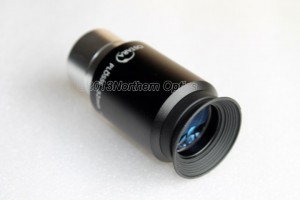
The Ostara PL32mm eyepiece can be purchased from Northern Optics as part of the Ostara 1.25″ Planetary eyepiece and filter set. Though it may be available as a separate item while stocks last.

At first glance it looks very similar to the Optical Hardware PL30mm eyepiece. But when you pick it up, it feels much more solid. Lens coatings are better, and internal baffling is excellent.

For this observing test I used a Skywatcher 12″ dobsonian. The eyepiece gave 47x magnification. As this eyepiece is designed for wide field observations, I turned to the double cluster (NGC 869 and 884). I was immediately impressed with the bright image showing excellent colours and contrast. Having a closer look there was some elongation of stars in the outer 3rd of view. But as the clusters were within this field of view it was not a problem.

From my light polluted viewing location, a combination of a good quality rubber eye cup and great internal baffling kept most of the stray light out of view.

Before the session ended, I turned to Polaris. Despite the low magnification, the 9th magnitude companion was easily seen despite the glare from the primary star.

The lens coatings are quoted as fully coated. But I believe they are at least multi coated from what I have seen with my observations. This is a quality and highly recommended eyepiece.

Posted in Eyepieces | Tagged , , | Comments Off on Ostara PL 32mm 1.25″ eyepiece review. Observing the double cluster

Skywatcher UWA-58 Planetary 5mm eyepiece review (double stars)

Copy of DSCF1167

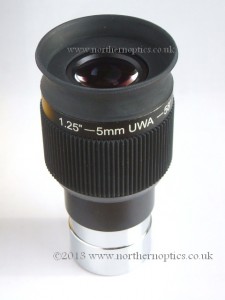
To give the Skywatcher UWA-58 5mm a few challenges I steered away from its description as a Planetary eyepiece to check out some multiple star systems.

Telescope used was a Skywatcher Skyliner 300mm (12″) Dobsonian, which gave 300x magnification.

First target was the famous “double double” in Lyra. The very first impression was the wide field of view. In fact it was much wider than my TMB 10mm eyepiece that I used to centre it. The separations of 2.6″ and 2.3″ (arc seconds) were an easy target , with clear dark space seen between them. The rubber eye cup was excellent, and made the observations very comfortable. An added bonus were the two 13th and 15th magnitude stars that are positioned between the two double stars. The extra light gathering of the 12″ Dobsonian made these very easy to see, without averted vision needed. Contrast was superb from an eyepiece that costs less than £50

Next target was Iota Trianguli. Often referred to as the second best colouful double star behind Alberio. Although the view was great at 300x with the 5mm, I would have best choosing something with less power for a better view.

Last but my no means least, a tough challenge. Iota Cassiopeiae is a triple star system with magnitudes of 4.65, 6.9 and 8.7. Separations of 7.4″ and 2.7″. The wider star of Mag 8.7 is easy to see. The tricky part is the two brighter stars. A combination of glare from both bright stars and the tight separation of only 2.7″ makes this very difficult (on paper). The Skywatcher UWA 5mm did not let me down. The separation was clearly seen, making this a lovely triple star system that should be on all dedicated double star observers lists

The superb Skywatcher 1.25″ UWA-58 5mm eyepiece can be purchased from Northern Optics . Summing up. Just because this is called a Planetary eyepiece, do not think it is just for Planets. Its a great double star splitter.

Posted in Eyepieces | Tagged , | Comments Off on Skywatcher UWA-58 Planetary 5mm eyepiece review (double stars)

Celestron Edge HD telescopes and aplanatic optics

Aberrations are defects in images produced by a telescope (or optical system). They are caused by limitations in the design and manufacture of the optics. Designers and optical factories strive to produce affordable telescopes that have as few aberrations as possible.

Two major aberrations seen in telescopes are spherical aberration and coma.

Spherical aberration is caused by rays of light passing at different distances from the center of a lens or mirror not coming to the same focus. Edge rays will typically come to a focus closer to the lens or mirror than central rays. Corrector plates in Schmidt-Cassegrain telescopes are designed to fix this aberration. Coma is a related effect: it is spherical aberration from rays that come in off-axis. It shows up as little off-axis comet-shaped blobs that point inwards towards the center of the field and that get bigger as you look towards the edge of the field of view.

Aplanatic optics are designed to eliminate both spherical aberration and coma. They are superior to SCT optics that rely only on the corrector plate, since the corrector only gets rid of the aberrations in a small area around the center of the field of view.  This is especially important for astrophotography, where coma towards the edges of an image can be very noticeable.

The end result is sharper images across a much wider field of view than in other designs. EdgeHD aplanatic optics maintain diffraction-limited images across the entire field of view of many of the most popular astrophotography cameras.

Posted in User Guides and Tutorials | Comments Off on Celestron Edge HD telescopes and aplanatic optics

Why do I need to polar align a telescopes

As the earth rotates around its axis, the stars appear to move across the sky. If you are observing them using an altitude-azimuth (alt-az) mount, they will quickly drift out of view. Readjustments to get them back in view are awkward and frequent or require computerized tracking.

In order to avoid these problems for either visual astronomy or astrophotography, you need a different type of mount that’s oriented or aligned to make following the apparent motions of the stars much easier than with an alt-az mount.

A telescope on an equatorial mount can be aimed at a celestial object and easily track the daily motion, keeping it in your eyepiece. It works by first polar aligning or inclining it at an angle equal to your latitude and pointing one axis (called either the polar axis or right ascension (RA) axis) in the same direction as the earth’s rotational axis (towards the celestial pole). Once the polar axis is parallel to the earth’s axis and turned at the same rate of speed as the earth, but in the opposite direction, objects will appear to stand still when viewed through your scope. There is no rotation of the field of view and tracking can be extremely accurate, making the equatorial mount perfect for astrophotography.  It has two motions: in RA (east-west) and in declination (dec, north-south). With the use of setting circles, a polar-aligned equatorial mount can quickly find celestial objects.

Polar alignment

The north celestial pole (NCP) is the point in the sky
around which all the stars appear to rotate.
The star Polaris lies less than a degree from
the NCP and it can be used to roughly polar align
a telescope. However, for accurate polar alignment,
the polar axis of the telescope’s mount needs
to be aligned to the true NCP.

Aligning the telescope to the earth’s rotational axis can be a simple or rather involved procedure depending on the level of precision needed for what you want to do. For casual observing, only a rough polar alignment is needed. Better alignment is needed for tracking objects across the sky (either manually or with a motor drive) at high magnifications. Still greater precision is needed in order to use setting circles to locate those hard-to-find objects. Finally, astrophotography will require the most accurate polar alignment of all. 

Posted in User Guides and Tutorials | Comments Off on Why do I need to polar align a telescopes