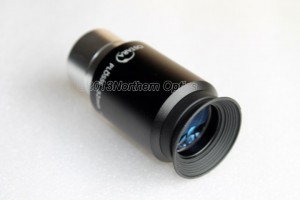
Ostara PL 32mm 1.25″ eyepiece review. Observing the double cluster

IMG_4398

The Ostara PL32mm eyepiece can be purchased from Northern Optics as part of the Ostara 1.25″ Planetary eyepiece and filter set. Though it may be available as a separate item while stocks last.

At first glance it looks very similar to the Optical Hardware PL30mm eyepiece. But when you pick it up, it feels much more solid. Lens coatings are better, and internal baffling is excellent.

For this observing test I used a Skywatcher 12″ dobsonian. The eyepiece gave 47x magnification. As this eyepiece is designed for wide field observations, I turned to the double cluster (NGC 869 and 884). I was immediately impressed with the bright image showing excellent colours and contrast. Having a closer look there was some elongation of stars in the outer 3rd of view. But as the clusters were within this field of view it was not a problem.

From my light polluted viewing location, a combination of a good quality rubber eye cup and great internal baffling kept most of the stray light out of view.

Before the session ended, I turned to Polaris. Despite the low magnification, the 9th magnitude companion was easily seen despite the glare from the primary star.

The lens coatings are quoted as fully coated. But I believe they are at least multi coated from what I have seen with my observations. This is a quality and highly recommended eyepiece.
Posted in Eyepieces | Tagged , , | Comments Off on Ostara PL 32mm 1.25″ eyepiece review. Observing the double cluster

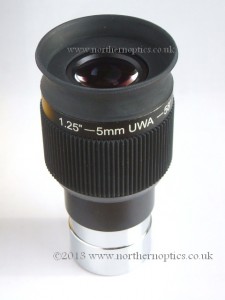
Skywatcher UWA-58 Planetary 5mm eyepiece review (double stars)

Copy of DSCF1167

To give the Skywatcher UWA-58 5mm a few challenges I steered away from its description as a Planetary eyepiece to check out some multiple star systems.

Telescope used was a Skywatcher Skyliner 300mm (12″) Dobsonian, which gave 300x magnification.

First target was the famous “double double” in Lyra. The very first impression was the wide field of view. In fact it was much wider than my TMB 10mm eyepiece that I used to centre it. The separations of 2.6″ and 2.3″ (arc seconds) were an easy target , with clear dark space seen between them. The rubber eye cup was excellent, and made the observations very comfortable. An added bonus were the two 13th and 15th magnitude stars that are positioned between the two double stars. The extra light gathering of the 12″ Dobsonian made these very easy to see, without averted vision needed. Contrast was superb from an eyepiece that costs less than £50

Next target was Iota Trianguli. Often referred to as the second best colouful double star behind Alberio. Although the view was great at 300x with the 5mm, I would have best choosing something with less power for a better view.

Last but my no means least, a tough challenge. Iota Cassiopeiae is a triple star system with magnitudes of 4.65, 6.9 and 8.7. Separations of 7.4″ and 2.7″. The wider star of Mag 8.7 is easy to see. The tricky part is the two brighter stars. A combination of glare from both bright stars and the tight separation of only 2.7″ makes this very difficult (on paper). The Skywatcher UWA 5mm did not let me down. The separation was clearly seen, making this a lovely triple star system that should be on all dedicated double star observers lists

The superb Skywatcher 1.25″ UWA-58 5mm eyepiece can be purchased from Northern Optics . Summing up. Just because this is called a Planetary eyepiece, do not think it is just for Planets. Its a great double star splitter.

Posted in Eyepieces | Tagged , | Comments Off on Skywatcher UWA-58 Planetary 5mm eyepiece review (double stars)

Celestron Edge HD telescopes and aplanatic optics

Aberrations are defects in images produced by a telescope (or optical system). They are caused by limitations in the design and manufacture of the optics. Designers and optical factories strive to produce affordable telescopes that have as few aberrations as possible.

Two major aberrations seen in telescopes are spherical aberration and coma.

Spherical aberration is caused by rays of light passing at different distances from the center of a lens or mirror not coming to the same focus. Edge rays will typically come to a focus closer to the lens or mirror than central rays. Corrector plates in Schmidt-Cassegrain telescopes are designed to fix this aberration. Coma is a related effect: it is spherical aberration from rays that come in off-axis. It shows up as little off-axis comet-shaped blobs that point inwards towards the center of the field and that get bigger as you look towards the edge of the field of view.

Aplanatic optics are designed to eliminate both spherical aberration and coma. They are superior to SCT optics that rely only on the corrector plate, since the corrector only gets rid of the aberrations in a small area around the center of the field of view.  This is especially important for astrophotography, where coma towards the edges of an image can be very noticeable.

The end result is sharper images across a much wider field of view than in other designs. EdgeHD aplanatic optics maintain diffraction-limited images across the entire field of view of many of the most popular astrophotography cameras.

Posted in User Guides and Tutorials | Comments Off on Celestron Edge HD telescopes and aplanatic optics

Why do I need to polar align a telescopes

As the earth rotates around its axis, the stars appear to move across the sky. If you are observing them using an altitude-azimuth (alt-az) mount, they will quickly drift out of view. Readjustments to get them back in view are awkward and frequent or require computerized tracking.

In order to avoid these problems for either visual astronomy or astrophotography, you need a different type of mount that’s oriented or aligned to make following the apparent motions of the stars much easier than with an alt-az mount.

A telescope on an equatorial mount can be aimed at a celestial object and easily track the daily motion, keeping it in your eyepiece. It works by first polar aligning or inclining it at an angle equal to your latitude and pointing one axis (called either the polar axis or right ascension (RA) axis) in the same direction as the earth’s rotational axis (towards the celestial pole). Once the polar axis is parallel to the earth’s axis and turned at the same rate of speed as the earth, but in the opposite direction, objects will appear to stand still when viewed through your scope. There is no rotation of the field of view and tracking can be extremely accurate, making the equatorial mount perfect for astrophotography.  It has two motions: in RA (east-west) and in declination (dec, north-south). With the use of setting circles, a polar-aligned equatorial mount can quickly find celestial objects.

Polar alignment

The north celestial pole (NCP) is the point in the sky
around which all the stars appear to rotate.
The star Polaris lies less than a degree from
the NCP and it can be used to roughly polar align
a telescope. However, for accurate polar alignment,
the polar axis of the telescope’s mount needs
to be aligned to the true NCP.

Aligning the telescope to the earth’s rotational axis can be a simple or rather involved procedure depending on the level of precision needed for what you want to do. For casual observing, only a rough polar alignment is needed. Better alignment is needed for tracking objects across the sky (either manually or with a motor drive) at high magnifications. Still greater precision is needed in order to use setting circles to locate those hard-to-find objects. Finally, astrophotography will require the most accurate polar alignment of all. 

Posted in User Guides and Tutorials | Comments Off on Why do I need to polar align a telescopes

What are RA and DEC on an equatorial telescope

RA (right ascension) and Dec (declination) are the coordinates on the sky that correspond to longitude and latitude on the earth. RA measures east and west on the celestial sphere and is like longitude on the earth. Dec measures north and south on the celestial sphere and is like latitude on the earth.

RA is measured in hours minutes and seconds of time. The reason for this is the sky turns once a day to the west as the earth rotates to the east. The celestial sphere moves one hour of RA west per hour of time and 24 hours of RA during the course of the whole day. Since this is a 360-degree rotation, one hour of RA is equal to 15 degrees of turning (360/24 = 15). Just like lines of longitude, RA lines are also great circles converging on the north and south celestial poles.

Longitude has the Greenwich meridian as the zero line dividing east and west. On the sky, the zero meridian in RA is labeled 00h00m00s. It intersects the celestial equator at a point called the vernal equinox (where the sun crosses the celestial equator in late March of each year).

Measurements north and south on the sky are called declinations (commonly abbreviated as Dec, DEC or dec). Just like latitude, declination is measured in degrees, minutes and seconds north (positive) and south (negative), with 60 minutes in each degree and 60 seconds in each minute of declination.

The celestial equator is 0 degrees declination, and the north and south celestial poles are +90 and -90 degrees. The North Star Polaris is nearly at the north celestial pole at +89.2 degrees. The celestial equator is a full 360-degree circle splitting the celestial sphere into the northern and southern celestial hemispheres or simply the northern and southern sky. It’s the projection of our equator in space. It is directly overhead at the earth’s equator.

You can use a star’s declination to figure out how high it will get in the sky. The star Vega has a declination of +39 degrees, so it passes directly overhead at north latitude 39 degrees on the earth (approximately the latitude of Denver).  At 47 degrees north latitude (approx. Seattle or Vancouver), Vega will never reach 90 degrees altitude, but will peak out eight (47-39) degrees south of the zenith.

Posted in User Guides and Tutorials | Comments Off on What are RA and DEC on an equatorial telescope

Choosing the right telescope


There are lots of telescopes available on the market, and for the beginner, selecting one can be a bewildering experience. Before buying a telescope it is important to ask yourself the following questions, or simply contact Northern Optics telescopes of Lincolnshire for advice

Selecting a telescope for both astronomy and land viewing sounds attractive, but these applications can work against each other, and your choice will usually be a compromise. However, once you have decided on the telescope’s main purpose, choosing one can become much easier.If you have decided that your telescope will be used primarily for observing the night sky, the instrument required does not necessarily need to give a right side up image and is not required to focus on nearby objects. With the exception of the moon, planets and close star clusters, interesting night sky objects are faint, in fact most are very faint. As a new observer you may be mainly interested in viewing the moon and planets, and if this is the case, a telescope with a small objective (primary mirror or lens) may be sufficient. However, most observers quickly graduate to galaxies, nebulae, globular clusters, open clusters etc. To view these objects you will require a telescope with the largest aperture that is possible for your circumstances, which will include things like cost, weight, portability, etc.

Newtonians are a popular choice for astronomical use because they have the lowest cost per inch of aperture. Observation of faint deep sky objects, such as nebulae and galaxies, can be achieved at a relatively reasonable cost by reflectors having mirror diameters of 6-8″

Refractors are good for achieving high power and contrast when viewing the planets and the moon. They have a reputation of providing crisp, sharp-quality images. Since they are virtually maintenance free, they are easy to operate, but due to high costs for the large aperture scopes, most beginners will choose a Newtonian reflector as a first scope for all round astronomy. Short tube refractors are now another low cost option for beginners. Their smaller size makes them an excellent choice for a portable telescope and the beautiful wide-field star vistas which they provide, are great for learning your way around the night sky.

Posted in User Guides and Tutorials | Tagged , | Comments Off on Choosing the right telescope

Visionary HD 20×80 binoculars. Perfect for astronomy

IMG_3205

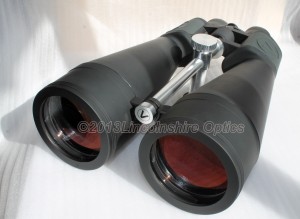
A couple visited the Northern Optics weekend outlet looking for a pair of binoculars suitable for astronomy that would compliment their 5″ refractor.  The set he went for was the Visionary HD 20×80.

The plus points from the customers angle was the nice sharp and wide field of view. Lots of detail was picked out on targets from around 100 yards to one mile away. Also they were happy that no tripod adapter was needed, as it is built in to the balance bar. They also commented on the sturdiness of the carry case.

Just like me, they preferred to have the eye cups down at all time for a more comfortable view

The Visionary HD binoculars can be bought from Northern Optics. Our weekend display over looks a country park with distant views. Ideal for those who like to try before you buy.

As well as astronomy use, the HD 20×80 are also suited to ship spotting and long distance terrestrial use. A sturdy tripod will be needed


Posted in Visionary Binocular Reviews | Tagged , , | Comments Off on Visionary HD 20×80 binoculars. Perfect for astronomy

Ostara 1.25″ Moon and Skyglow filter gets a great review in All about space magazine

IMG_3187

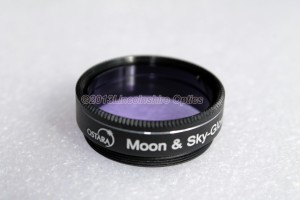
The Ostara Moon and Skyglow filter gets a great review in the “All about space” magazine. They rate it as excellent value for money for a light pollution filter. This filter has been very popular at the North Lincolnshire astronomy society for both visual and photographic use

Available in both 1.25″ and 2″

To use the filter, you simply screw direct on to your 1.25″ or 2″ eyepiece. By reducing light reaching the eye, your views of the Moon will be more comfortable and aid increased contrast.

As a light pollution, this clever filter reduces sodium light (street lights) for enhanced views in light polluted areas

Click here to buy from Northern Optics

Posted in Accessories | Tagged , | Comments Off on Ostara 1.25″ Moon and Skyglow filter gets a great review in All about space magazine

New for 2013. Skywatcher SWA-70 eyepiece

find us on facebook
SW 2 inch 70 deg

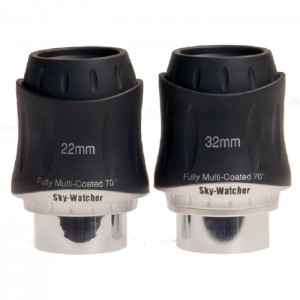
New for 2013 is the Skywatcher SWA-70 eyepieces. Available in 2 sizes. 2″ and 1.25/2″ dual fit.

Features 8 element lens assembly, fully multi-coated optics, long eye relief and twist eye cups. A massive 70 degree wide field of view for picture window views of the heavens.

Available to buy from Northern Optics HERE

1.25/2″ threaded to accept 1.25″ filters. The 2″ version accepts 2″ filters. Available in various focal lengths from 3.5mm to 32mm

Rubber clad body for added grip and protection. Image above shows the 2″ option

Posted in Eyepieces | Tagged , | Comments Off on New for 2013. Skywatcher SWA-70 eyepiece

Helios Odyssey-HR 8×42 and 10×42 binoculars

odessy hr
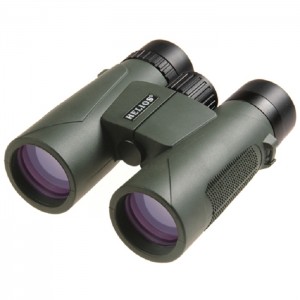
New for 2013 is the Helios Odyssey-HR 8×42 and 10×42 binoculars.
Fully multi-coated optics, nitrogen waterproofing and Di-electric BAK-4 phase corrected prisms makes them outstanding value for money.
Lightweight (690g) magnesium body makes them perfect for long hiking or bird watching sessions.

Rubber armoured body helps give great handling , as well as help protect against minor bumps.

Good news for spectacle wearers with long eye relief. 19mm on the 8×42 and 16mm on the 10×42 models.

Both models complete with semi soft case, neck strap and 1 year warranty

Helios binoculars can be purchased from Northern Optics HERE

Colour Green

Full specs
8×42
Magnification 8x
Objective diameter 42mm
Weight 690g
Field of view 130m @ 1000m
Eye relief 19mm
Close focus 2m

10×42
Magnification 10x
Objective diameter 42mm
Weight 690g
Field of view 112m @ 1000m
Eye relief 16mm
Close focus 2m


Posted in Helios Binocular Reviews | Tagged , , , , | Comments Off on Helios Odyssey-HR 8×42 and 10×42 binoculars