Why does my Celestron Firstscope give an upside down image

If everything is upside down when you use your telescope, don’t be alarmed.

Astronomical telescopes are designed to give an upside down or inverted image. This is not a problem when looking at the sky, since orientation relative to the ground does not matter for a planet, star or nebula.

Newtonian reflectors like the FirstScope show an inverted image when looking into the scope’s eyepiece from the rear (mirror end). The image will appear rotated at an angle when looking into the eyepiece from the scope’s side.

Since the eyepiece of the FirstScope is mounted on top of the tube, there is a trick you can use with your FirstScope for terrestrial views. If you look into the eyepiece from in front of the telescope and slightly to the side so as not to block the light coming into your FirstScope, you image will be right side up and correct left to right.
Posted in User Guides and Tutorials | Tagged , | Comments Off on Why does my Celestron Firstscope give an upside down image

How to store a Celestron SCT telescope

It’s best to protect your telescope from the elements and bring it inside between observing sessions.

Allow the scope to warm up when bringing it inside. Uncover all optics and let the tube and tripod sit in the open. Moisture (dewing and condensation) will evaporate off the scope and it can then be safely stored.

Put on the front lens cover and the tube cap to prevent dust accumulation, insect invasion or inadvertent damage to the optics.

The scope should be stored at room temperature. It’s best not to expose it to extremes of temperature and humidity while in storage. Keep it out of direct sunlight. Protect the scope and tripod from dust and dirt with a cover or case.

Remove the SCT tube from the mount to store it separately from the single-arm mount. While your scope can be stored either horizontally or vertically, here are some points to keep in mind that may dictate your storage preference. Orienting the tube vertically upwards puts the least long-term stress on the focusing mechanism from the mirror’s weight. If you keep the SE tube on the mount, a vertically downwards orientation with the cap flush against the base and clamp tightened puts the least long-term stress on the mount’s drive mechanism. Racking the mirror all the way to the back of the tube (clockwise or near-focus) puts the least stress on the baffle-spindle that supports the mirror’s weight.

Posted in User Guides and Tutorials | Tagged , | Comments Off on How to store a Celestron SCT telescope

What is a Newtonian reflector

Newtonians are a type of reflecting telescope. A concave parabolic primary mirror at the back of the telescope collects and focuses incoming light onto a flat secondary (diagonal) mirror that in turn reflects the image out of an opening at the side of the front end of the main tube and into the eyepiece. (For large f/ratio Newtonians, the primary mirror often has a spherical shape.)

Advantages

  • Lowest cost per inch of aperture compared to refractors and catadioptrics since mirrors can be produced at less cost than lenses in medium to large apertures.
  • Reasonably compact and portable up to focal lengths of 1000mm.
  • Excellent for faint deep sky objects such as remote galaxies, nebulae and star clusters due to the generally fast focal ratios (f/4 to f/8).
  • Reasonably good for lunar and planetary work.
  • Good for deep sky astrophotography (but not as convenient as and more difficult to use than catadioptrics).
  • Low in optical aberrations and deliver very bright images.


Disadvantages

  • Generally not suited for terrestrial applications.
  • Secondary (diagonal) mirror and its supporting structure obstruct some of the incoming light, leading to slight light loss and scattering (diffraction of light) when compared with refractors.
Posted in User Guides and Tutorials | Tagged , | Comments Off on What is a Newtonian reflector

What does star magnitude mean

Astronomers use a system of magnitudes to accurately measure the brightnesses of astronomical objects. An object is said to have a certain numerical magnitude. The larger the magnitude number, the fainter the object. Each object with an increased number (next larger magnitude number) is approximately 2.5 times fainter. The faintest star you can see with your unaided eye (no telescope) is about sixth magnitude (from dark skies) or magnitude 6.0, whereas the brightest stars are negative numbers. Sirius is the brightest appearing star in the sky and is magnitude -1.5.

Apparent magnitudes of selected objects
Sun                             -26.7
Full moon                   -12.6
Venus (maximum)     -4.7
Sirius                          -1.5
Saturn (maximum)     -0.2
Naked-eye limit         6.0
Neptune (maximum) 7.7
Quasar 3C-273         12.9
Pluto (maximum)       13.7
8-inch telescope        14.2 (limit)
Hubble Telescope     30.0 (limit)

Posted in User Guides and Tutorials | Tagged | Comments Off on What does star magnitude mean

What is a star diagonal

A star diagonal is a prism or mirror set to direct light at a 90-degree angle to the telescope’s optical axis. It’s an ergonomic accessory to make viewing of the sky more convenient and comfortable for objects nearly overhead or for a less neck-craning angle for objects at other altitudes.

Newtonian-type reflecting telescopes don’t need a star diagonal, since their design already incorporates a right-angle reflection to the side of the tube and a comfortable eyepiece position.

Posted in User Guides and Tutorials | Tagged | Comments Off on What is a star diagonal

What is a finderscope

A telescope finderscope a small telescope attached to the main telescope optical tube assembly. It is of low power with a wide field of view and assists you in pointing to find objects to observe through the main telescope. Crosshairs aid in centering the object you seek.  Most finderscopes give an inverted (upside down and left/right reversed) image.

Typical finderscopes come in 6×30, 8×50 or 9×50

Posted in User Guides and Tutorials | Tagged | Comments Off on What is a finderscope

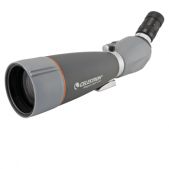
Can you take prime focus photographs through a Celestron Regal F-ED spotting scope

celestron-regal-80-f-ed-spotting-scope.-608-p

Using a t-adapter and no eyepiece (prime focus) you can not achieve focus with a Celestron Regal F-ED spotting scope. This applies for t-adapters with and without a barlow lens attached.

To take images with your SLR camera through the Regal spotter is to use the eyepiece and adapter ring provided. Another way is to use single magnification eyepieces. We recommend the Celestron X-Cel 25mm, in combination with the Hawke HX3705 adapter together with a compatible t-ring

You can purchase Celestron Spotting scopes from Northern Optics HERE

Posted in User Guides and Tutorials | Tagged , , | Comments Off on Can you take prime focus photographs through a Celestron Regal F-ED spotting scope

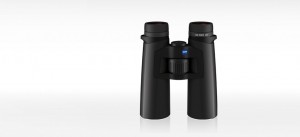
Zeiss Victory HT binoculars

victory-ht_hero_980x448

A revolution with up to more than 95% light transmission.

Up to more than 95% light transmission – this revolutionary value allows you to experience nature in a whole new dimension. The new VICTORY HT range benefits from an innovative optical concept: SCHOTT® HT high transmission glass, the Carl Zeiss T* multi-layer coating and the Abbe-König prism system. The result is a set of binoculars with unrivalled brightness, making it possible for you to observe for much longer periods of time. Complementing the unique, elegant design, the binoculars rely on particularly innovative ergonomics. The new Comfort Focus concept, for example, makes the brightest premium binoculars in the world extremely easy to use.


Innovative optical concept

Unrivalled brightness, thanks to a light transmission of up to more than 95% – this unique result is created by the innovative optical concept of the VICTORY HT range. It is made possible by the perfect interplay of SCHOTT® HT glass, the Carl Zeiss T* multi-layer coating and the Abbe-König prism system.  Observe those creatures that are active in the twilight hours, such as nightingales, earlier in the morning and bats, screech owls and other shy animals later in the evening. This innovative, high-performance package will enable you to enjoy the true majesty of nature, even in poor light conditions.


Ergonomic Comfort-Focus-Concept

Top quality user ergonomics – that is the promise of the new Comfort Focus concept, focussing wheel. The strikingly large focussing wheel is set a long way forwards on the bridge. You will be aware of the benefits the very first time you use the binoculars. The focussing wheel lies automatically below your index finger, your thumbs gently grip the barrels while the remaining three fingers rest easily next to your index finger. You will no longer have to think about how to hold the binoculars: when a bird flies past you can simply lift them up and focus. The particularly long gearing of the focussing wheel allows you to focus on your target quickly and accurately. The VICTORY HT: designed to ensure that you get the most out of your birdwatching!


Extreme robust Double-Link-Bridge

The extremely robust construction offers the very highest levels of precision and durability. The housing, with its innovative double-link bridge, is made of high-tensile, ultra-light magnesium. The focussing wheel is securely embedded in the housing. This means that the VICTORY HT is perfectly equipped for use even in the most extreme conditions.


Brilliant FL concept

Make the most of the full richness of colour and brilliance in the world of birds. The outstanding lens construction, using lenses made of high-performance fluoride glass – FL for short – helps you to see the colours with more brilliance and natural authenticity and to observe details such as plumage more clearly. Chromatic aberrations are kept to a minimum. Important details, such as a bird’s eyebrow stripe, are shown as nature intended them to be seen, while colours and shapes are clearly defined.


LotuTec® coating

Water simply rolls off the lens as it does from a lotus leaf or off a duck’s back. The LotuTec®coating on the lens and eyepiece ensures that water or snow simply roll off the surface of the glass. Since neither water nor dirt can collect on the surface of the VICTORY HT you can spend less time cleaning and more time watching nature.


Design for perfection

The elegant and ergonomic design makes the VICTORY HT binoculars far easier to use. The particularly slim construction of the double-link bridge and an extremely large grip on the lens barrels make these binoculars exceptionally natural and easy to handle. This ensures smooth imaging in any situation, however they are held. In this way the design supports the highest standards of perfect visual experiences.

Posted in Carl Zeiss Binoculars | Tagged | Comments Off on Zeiss Victory HT binoculars

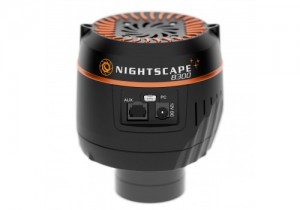
Celestron Nightscape 8300 CCD Camera

nightscape-ports_1

Quick Overview

  • Uses the famous KAF-8300 CCD that imagers have grown to love, due to the high resolution, low noise, great sensitivity and affordable cost.
  • A large 22.5mm diagonal CCD chip offers 8.3 megapixels of resolution. That means capturing a larger swatch of the sky with greater detail than similarly priced CCD cameras.
  • Nightscape 8300 is the most affordable feature-rich KAF-8300 camera readily available, retaining all of the advanced features found in more expensive cameras to obtain stunning astrophotos.
  • Regulated thermoelectric cooling and adjustable fan dramatically reduces thermal noise, producing superior images.
  • AstroFX software – takes you step-by-step from taking images to processing the final result.
  • The TEC and 16-bit A/D conversion provide lower noise and greater bit-depth than DSLR cameras, making the Nightscape 8300 an ideal upgrade for DSLR imagers who want to advance to CCD imaging and capture greater detail in every shot.
  • Internal mechanical shutter makes dark frame acquisition easy – no need to cap the telescope.
  • Internal 32MB SDRAM full frame memory buffer, ensures accurate and reliable image downloads
  • Specially designed IR-cut optical window with anti-reflection multi-coatings provides 94% (or greater) transmission of Hydrogen Alpha wavelength and maximum overall light transmission.
  • Celestron’s design combines form and function: Elegant industrial design, innovative heat-sink and air-flow system for efficient cooling, and cylindrical body is Fastar-friendly.
  • Removable 2” nosepiece is threaded for 2” filters.
  • ASCOM drivers are included for use with many other popular imaging software programs.
Posted in Accessories | Tagged | Comments Off on Celestron Nightscape 8300 CCD Camera

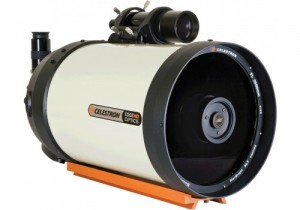
Celestron Edge HD 8 Optical tube assembly

Quick Overview

  • 91030-xlt_edgehd8_large_1
  • 8″ EdgeHD Optical Tube Assembly
  • Aluminum Optical Tube
  • Celestron’s premium StarBright XLT coatings
  • 2032 mm focal length (f/10)
  • 40 mm eyepiece included (51x)
  • Visual back allows for use with 1.25″ accessories
  • 9×50 finderscope to help accurately find objects
  • Star diagonal provides more comfortable viewing position when observing objects that are high in the sky
  • Mirror Support Knobs hold the mirror in place and reduces image shift during imaging.
  • Tube vents with integrated 60 micron mesh filter allowing hot air to be released from behind the primary mirror.
  • Fastar Compatible optical tubes are equipped with a removable secondary mirror for fast f/2 ccd imaging
  • Includes dovetail rail compatible with CGE mount

Posted in User Guides and Tutorials | Comments Off on Celestron Edge HD 8 Optical tube assembly