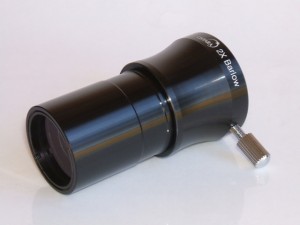
New for 2012 is the Ostara 1.25″ barlow lens. Available in 2x and 3x. Features a high quality achromatic doublet lens. Sturdy metal construction with a new eye catching modern design. Complete with lens caps.
Image shows the 2x version

New for 2012 is the Ostara 1.25″ barlow lens. Available in 2x and 3x. Features a high quality achromatic doublet lens. Sturdy metal construction with a new eye catching modern design. Complete with lens caps.
Image shows the 2x version
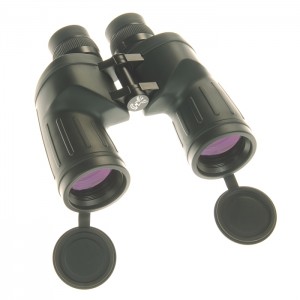
The Helios Apollo range of binoculars have eyepieces that are threaded to accept 1.25″ astronomical filters. The eyepieces themselves can not be changed.
The Helios Apollo binoculars are available in 7×50, 10×70, 15×70, 20×110 and 25×110. Image shows the 7×50 version.

A pair of binoculars has two main sets of lenses. The smaller being the eyepieces that you look through. The larger lens at the opposite side is called the objective lens. This can be made up of two, three or more glass elements, depending on the model.
The main task of the objective lens is to let the light through to the eyepiece, which in turn brings everything in to focus.
The image shows how to measure the width of the objective. In this case , this is a set of 10×50 binoculars. 10 being the magnification, and 50 being the width of the objective lens in mm
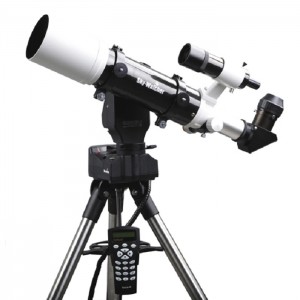
New for 2012 is the Skywatcher Allview multi-functional computerised mount. Its many uses include time lapse photography, 360 panorama and astronomy (goto). Attractively priced and very sturdy.
Click here for more images and full specs
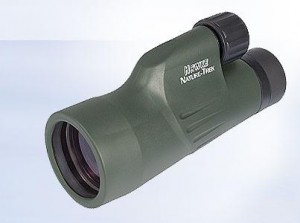
A customer visited the Northern Optics outlet at Barton Upon Humber, having previously purchased the illusion 7×35 monocular. They was looking for a monocular with a little more light gathering capability. The obvious choice was the Hawke Nature-Trek 10×50.
First impressions was how clear and bright the image was. Long eye relief was ideal, as the customer was a spectacle wearer. The added benefit of a mini tripod was a pleasant surprise. When folded, the mini tripod became a perfect steadying aid.
As well as day light use, the monocular were also going to be used for astronomy. Fully multi-coated optics, nitrogen waterproofing, and a large 50mm objective makes them an ideal mini scope.
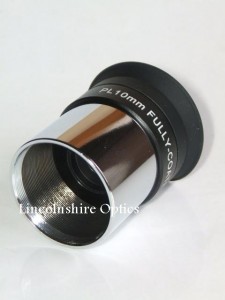
The Ostara PL10mm 1.25″ eyepiece comes packaged in a handy bolt case. No eyepiece caps are included. Build quality is well up there with similar models. It feels very solid to hold. The eye cup is fold down. As eye relief is quite short, I recommend having this folded down at all times. Even when folded down, there is still enough of the eye cup protruding to keep your eyes from touching the lens.
So as for the optics. I tested on the Moon, using a Tal 200k telescope. The 10mm eyepiece gave 200x. Considering the telescope had,nt been cooled down much, the results were excellent. Detail inside the craters and rifts were clear to see. Contrast was very good. Despite the short eye relief, I found viewing very comfortable.
There was a slight colour cast compared to some more expensive eyepieces. But if £25 is your budget, then the results are more than acceptable. I could detect no chromatic aberration, which was another plus point
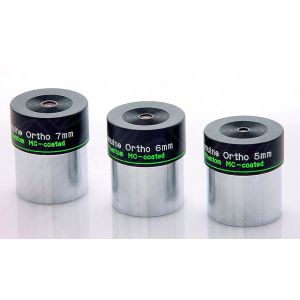
The Baader Genuine Orthoscopic range of 1.25″ eyepieces are designed for the discerning Planetary , Lunar and Solar observer. At 40 degrees true field, these are not wide angle, but that is not what these eyepieces are for.
Superb internal baffling with blackened lens edge help cut out most stray light. Broadband multi-coated optics on every lens surface ensures maximum light transmission and high contrast images. Available in a good range of focal lengths.
Click here for more information
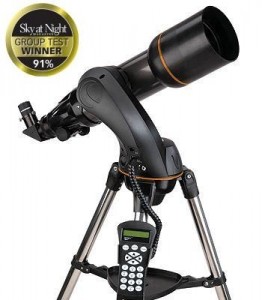
The SLT in the title of the Celestron Nexstar SLT telescope stands for Star Locating Telescope
Who are Ostara ?… That seems to be a frequently asked question on internet forums. Ostara products include Binoculars, Telescopes and astro accessories such as eyepieces and filters. Optical Hardware are the UK importer.
Ostara got great magazine reviews, with their Ostara Elinor 10×50 getting best in class in the BBC Sky at Night magazine. The optics in their binoculars are superb, and often over looked by more expensive binoculars from other more well known brands.
More and more, Ostara are moving in to the astronomy range. From budget plossls to wide angle 2″ eyepieces and filters. The filters include 1.25″ and 2″ Moon filters, plus Olll and UHC (ultra high contrast filters). The 2″ Moon / Skyglow filter was featured in the BBC Sky at Night magazine.
As with the binoculars, the astro accessories give you great optics and build quality, but at a price most people can afford.
A range of Ostara products can be bought from Northern Optics by clicking HERE
When digiscoping with a Canon EOS body on aperture priority , you will notice the f number shows as f0.0 rather than the usual f11, f8, f4 etc. This is nothing to worry about, and the camera will still give correct exposure. It will still adjust the shutter speed accordingly. It shows as f0.0 simply because a spotting scope for digi-scoping or a telescope for astrophotography are not camera lenses. In other words the camera does not recognise them.
If using some Nikon DSLR camera bodies, you may only be able to use manual exposure for this type of photography. If you set them on aperture priority, the camera may say no lens attached and not allow you to take the photo, unless you use manual.