Skywatcher UWA 5mm Planetary eyepiece. IO shadow transit

Copy of DSCF1167

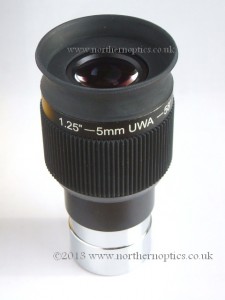
A Sky-watcher UWA 5mm eyepiece was used on my trusty old 10″ dob , to observe the IO shadow transit of Jupiter on the 18th Feb 2013.

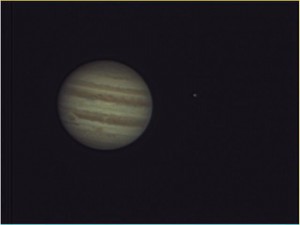
Pointing the telescope towards Jupiter, I had no idea there was such a spectacle awaiting me. The pin sharp shadow of IO literally jumped out at me. The high contrast optical quality of the UWA 5mm made for a memorable experience. To add to the show, the shadow of the Galilean disc was hovering over the Great Red Spot.

Detail in the cloud belts was the best I have ever known. The outline of the Great Red Spot was crystal clear.

A wide 23mm clear glass element , 16mm eye relief gave a comfortable viewing experience. The UWA 5-element lens assembly gave almost a picture window wide field of view. This from a 5mm eyepiece !

Highly recommended and fantastic value for money


Posted in Eyepieces | Tagged , , | Comments Off on Skywatcher UWA 5mm Planetary eyepiece. IO shadow transit

What eyepieces do you get with a Visionary Saxon-4 telescope

Exif_JPEG_PICTURE

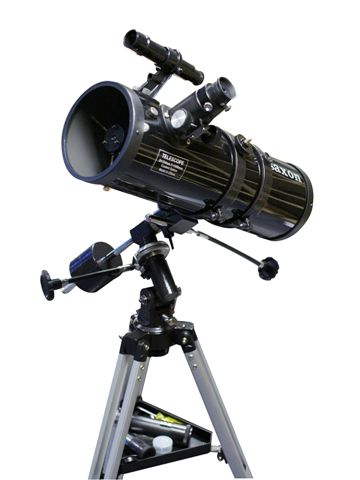
When you purchase a Visionary Saxon-4 telescope, you get the following 1.25″ eyepieces and accessories as standard. The 25mm and 10mm modified achromatic are a step up in quality compared to the slightly cheaper Visionary Telesto telescope

  • 25mm modified achromatic
  • 10mm modified achromatic
  • 4mm SR
  • 1.5x erect image barlow
  • 5×24 finderscope
  • Accessory tray
  • Cleaning cloth

Buy the Visionary Saxon-4 telescope here


Posted in Telescope Reviews | Tagged , , | Comments Off on What eyepieces do you get with a Visionary Saxon-4 telescope

North Lincs Astro meeting. 4th February 2013

4732735

The poor weather did not deter the regular members of the North Lincolnshire astronomy group from visiting the venue at far ings on 4th Feb 2013.

It was great to see 6 new faces coming along. Lets hope they enjoyed their stay, and return again on a regular basis.

Damian kicked things off with a great talk on the Constellation of Orion. This included the Mythological history of the constellation, followed by a tour of interesting objects to see.  Damian’s talk was followed by Chris giving us all a very informative talk on “imagining the unimaginable”. We became aware of how small we are in the cosmos, and the great distances involved in stellar travel.

Thank you as always to the Lincolnshire Wildlife trust for the use of the Venue
As with every meeting Northern Optics was in attendance with a selection of eyepieces, binoculars and accessories for sale at reduced prices

Naturally as we all came out of the venue, the skies cleared. But that’s all part and parcel of being an astronomer.

For more details on the North Lincs Astro club, Click Here


Posted in News and Blog | Tagged , | Comments Off on North Lincs Astro meeting. 4th February 2013

How to get dust off a telescope objective lens.

northernoptics-bulb-blower

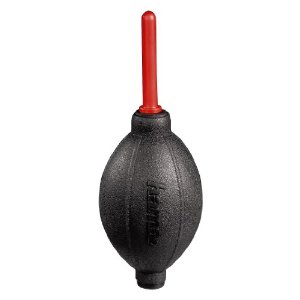
If you find a few specs of dust on your telescope lens , they are best cleaned off with a blower brush or bulb blower. Do not try to wipe them off.

As a rule of thumb, any small particles on your telescope objective will not affect the performance., and can be left.

If you use a lens cleaning fluid, always use a high quality product as recommended by the manufacturer or dealer.  Remember to use a dust blower before applying a cloth or fluid.

A very important point when using lens cleaning fluid (bottle or spray) is to apply to your cleaning cloth first. Never apply the fluid direct on to the lens.

Another option to lens cleaning cloths or fluids is a dry cleaning tool such as the Celestron lenspen.


Posted in User Guides and Tutorials | Tagged , | Comments Off on How to get dust off a telescope objective lens.

Ostara / Optical Hardware 1.25″ 30mm Plossl eyepiece review

DSCF1105

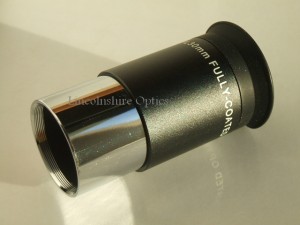
To test the Optical Hardware / Ostara 30mm plossl, I viewed the Moon using a Visionary Telesto 114mm telescope . This gave a 33.3x magnification.  After allowing for cooling off times, I was greeted with a delightful full view of a crescent Moon.

First thing was to get used to the very long eye relief. I would estimate 20mm or just above. This meant that I could get comfortable views without having to close one eye.

Despite the low magnification, a tremendous amount of detail within craters could be easily detected.  On this occasion, I could easily make out detail in the shadowed side of the moon (Earth Shine).  The wide field of view meant you had very little adjustment of the telescope to make, to keep in view. This is ideal if more than one person wants to view the same target.

No false colour (chromatic aberration) was evident.  To test this further, I placed the Moon on the edge of view.  Edge of field detail on the Moon was still very clear, with no fine tuning of the focus wheel needed. When switching to the 15mm plossl, I also found almost no re-focusing was needed (par focal).

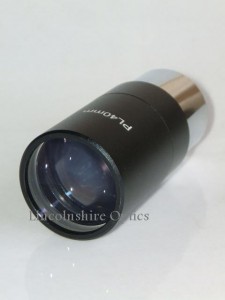
Build quality is excellent. No eye cups are included. That said, you do get a handy bolt case. The eyepiece is threaded to accept 1.25″ eyepieces.


Click here to buy


Posted in Eyepieces | Tagged , , , | Comments Off on Ostara / Optical Hardware 1.25″ 30mm Plossl eyepiece review

Waters Edge visitors centre, Barton. Bird sightings 12th January 2013

Bird sightings

Location – Waters edge country park (main lake) Barton Upon Humber

Date – 12th January 2013

  • Mallard
  • Coot
  • Moorhen
  • Canada Geese
  • Greylag Geese
  • Pochard
  • Common Gull
Posted in News and Blog | Tagged | Comments Off on Waters Edge visitors centre, Barton. Bird sightings 12th January 2013

What is a Catadioptric telescope

Exif_JPEG_PICTURE

A Catadioptric telescope has an optical tube assembly that uses a combination of mirrors and lenses. A common configuration is the Maksutov Cassegrain (Mak). This has a corrector plate (lens) at the front of the tube, in addition to the main mirror at the base of the tube.

Another type is the Catadiptric Newtonian. This has an additional lens in the focus assembly. In effect, it is a barlow lens that doubles the focal length of the tube without the extra size and weight of a long focal length OTA. The downside, is that there may be some slight loss of light gathering when compared to non catadioptric newtonian reflectors.

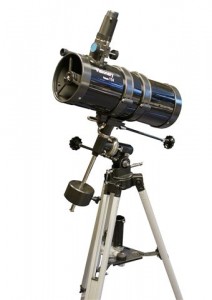
A good example of a Catadiptric Newtonian reflector is the  Visionary Telesto 114mm newtonian reflector (see image)


Posted in News and Blog | Tagged , | Comments Off on What is a Catadioptric telescope

Imaging Jupiter with an Ostara 1.25″ 3x achromatic barlow lens

jupiter

An owner of the new Ostara 3x achromatic barlow lens took this amazing image of Jupiter and Europa.  Equipment used was a Skywatcher Skymax 150, Ostara 3x barlow lens and a web cam. All this was mounted on a Skywatcher NEQ6 mount.

The imager got this amazing result using Firecapture, 90sec capture, 1200 frames best 400 stacked in Registax 6

Full credit for the image goes to Paul Cotton from the North Lincs Astro society

Click here to buy the Ostara 3x achromatic barlow lens


Posted in Images | Tagged , , | Comments Off on Imaging Jupiter with an Ostara 1.25″ 3x achromatic barlow lens

Skywatcher Planetary UWA 1.25″ eyepieces. New for 2013

skywatcher_planetary_ UWA_eyepiece_northernoptics

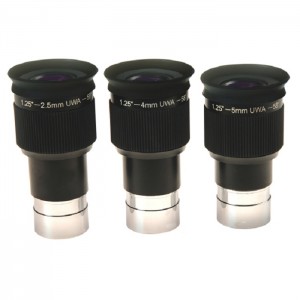
New for 2013 is the Skywatcher UWA Planetary eyepieces (1.25″). Available in 2.5mm, 4mm and 5mm. 6mm , 7mm and 9mm available at a later date to be announced. At just £39.99 they are within most budgets.

Optical system is a 5-element fully multi-coated modified plossl design.  58 degrees field. Complete with fold down eye cups (eye relief 16mm). Threaded to accept 1.25″ filters.

These are designed for high magnification Planetary observations

Posted in News and Blog | Tagged , , | Comments Off on Skywatcher Planetary UWA 1.25″ eyepieces. New for 2013

Ostara 1.25″ 40mm Plossl eyepiece review

To test to 40mm Ostara plossl eyepiece , I used a Visionary Telesto 114mm Newtonian telescope to view the Moon and Jupiter.

Conditions were not favourable for the test, due to near by light pollution and a brisk wind. With all the light pollution, I feared lots of internal reflection from the 40mm plossl. To my surprise, there was none evident. This helped give a crisp and clear view. The focal length of the eyepiece gave 25x power when used with the Visionary Telesto 114. The Moon took up around 1/3 of the wide field of view.

Having such a low power eyepiece gave very good edge of field sharpness , with virtually no ghosting.  Overall, the eyepiece gave remarkable results for such a low priced item. Despite the Telesto getting mixed reviews, this test proved that even the lowest spec telescopes can give great results with the addition of an Eyepiece upgrade.

The low power eyepiece gave superb views of the Mountain,s valleys and craters. This included Clavius and all the mini craters within.

Turning to Jupiter. At just 25x you are not going to see much detail. But the two main cloud belts were clear to see, and the 4 satellites were pin point dots of light.

Only one issue was the lack of an eye cup. I would estimate that eye relief is approx 25mm. Without an eye cup to rest on (no spectacles used) I needed to move my head forwards and backwards till I hit the sweet spot . I found this took a few seconds to master. However, if you are a telescope novice that does,nt understand fully how eye relief works, this could be a problem.

The long eye relief , on the plus side mean,t that I could easily view the Moon without having to shut one eye. Also the wide 28mm clear aperture is ideal for basic digiscoping.

Click here to buy


Posted in Eyepieces | Tagged , , , | Comments Off on Ostara 1.25″ 40mm Plossl eyepiece review