North Lincolnshire Astronomy Society. 5th December 2011

We had a great evening at the North Lincs Astro club on the 5th December 2011. Around 15 members turned up. Despite a little cloud cover and a very chilly wind, we got some super views of Jupiter, The Moon , and the Orion Nebula (M42)

Scopes used were a ST80 short tube refractor, 76mm Celestron reflector and a Celestron Ultima 80mm spotting scope. We were all amazed at how good the Celestron Ultima was when used for astronomy. No wonder it won best in class in the BBC Sky at Night magazine.

The raffle prizes on an astronomy calender and a red light torch were donated by the club and Northern Optics

Thank you as always for the Lincs Wildlife trust for the use of the facilities


North Lincs Astro web site


Posted in News and Blog | Tagged | Comments Off on North Lincolnshire Astronomy Society. 5th December 2011

What is a refractor telescope


What is a refractor telescope
There are three basic ways to bring light rays to a focal point. The earliest method used by telescope makers, was to bend the rays by passing them through one or more pieces of glass which had curved, polished surfaces. This method produces a type of telescope called a refractor.

Refractors have several advantages over other designs. They are enclosed so that dust and moisture doesn’t enter the optical tube.

They have fixed optics so that they don’t require routine collimation, which means that the optics don’t have to be aligned by the user.They do not have a central obstruction, which reduces the amount of light entering the tube and causes an alteration of the diffraction pattern. The resulting high-contrast, fine-resolution images produced are considered ideal for planetary viewing. A problem with refractors is that since many wavelengths of light are passing through glass, the uneven bending of the rays causes false colour, around bright objects. This must be counteracted with additional lenses and special glass. Since at least four lens surfaces usually have to be very accurately shaped, polished and coated, they are more expensive to produce than other telescope
Posted in User Guides and Tutorials | Tagged , | Comments Off on What is a refractor telescope

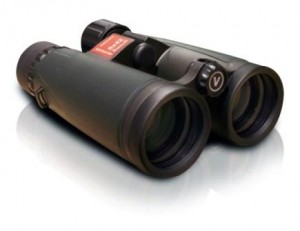
Visionary Fieldtracker Emerald ED 8×42 binoculars review


The Visionary Fieldtracker Emerald ED 8×42 binoculars received a great review in Birdwatching magazine 2011
Click here to read the full review (3.92MB download)

Click here to buy


Posted in Visionary Binocular Reviews | Tagged , , , | Comments Off on Visionary Fieldtracker Emerald ED 8×42 binoculars review

Astrophotography (part 1)

Astrophotography is a most rewarding hobby for many amateur astronomers. It is a wonderful way to capture and hold on to the beauty of the celestial objects we most admire, and provides us with a way to easily share them with friends, even when the telescope is not around.
It was once thought that astrophotography was something that only seasoned astronomers dare try. But, this is certainly not the case, and with the advent of digital cameras and eyepieces, astrophotography is becoming more accessible to more people all the time.
There are several types of astrophotography that vary in terms of difficulty and costs. Fortunately, some of the easiest kinds of astrophotography can be accomplished at the lowest cost. So, you don’t have to break the bank to get off to a good start.

Posted in User Guides and Tutorials | Tagged | Comments Off on Astrophotography (part 1)

Dark Sky Etiquette

A dark sky site is an observing area where we can avoid and be free of light pollution. It enhances our view of the night sky from about a few hundred naked eye stars to over many thousands.
There are two ways you can enjoy such a site: alone or in the company of fellow enthusiasts. The first is a quiet, very personal experience, valuable in itself as a way to connect to the cosmos. But the second is probably by far the more enjoyable of the two, provided everyone who shares the experience has respect for all present. That means following the basic rules of etiquette described below.

Plan to arrive before sunset. First, it will be easier to set up in daylight. Second, arriving late with headlights blazing can interfere with other people who are trying to fully adapt their eyes to darkness, which can take up to an hour.

If
you do unavoidably arrive late, dim your headlights on approach.

Whatever
time you arrive, slow down your speed of approach to avoid raising dust into the air.

If
parking is at a premium, leave the closest spots for people with the most (and/or heaviest) equipment. Their back muscles will thank you!

Don’t
move your car again until it’s time to leave. Especially avoid backing up, since backup lights are white, quite bright and cannot be disabled (only covered).

Darken
your vehicle’s interior by turning off your dome lights. Most cars are equipped with a simple switch. Truck lights do not always have a switch but the bulb can be loosened or removed. Do the same for trunk and hatchback lights.For the same reason, opening, closing and slamming of car doors and trunks should be kept to a minimum. Organise your car at home to reduce the number of times you need to go in for something.

Conduct
your idle chatter before viewing begins. Thereafter, keep the conversation subdued. Enthusiastic cries of “I’ve found it!” and “Have you seen this?” are exceptions to this rule!


Setting up together is not a problem. but respect each other’s space.

Use
red LED or red-filtered lights while you observe and if you have to set up in darkness. Never use white-light flashlights. Use the smallest possible light needed for reading star charts. Shelter your light with your body, telescope, car or whatever to minimize glare.

Before
approaching a telescope ask if the owner is doing photography or imaging. If they are, be careful not to step in front of the field of view of the telescope or lens. Especially don’t wave a light around in the vicinity.

Noise
pollution is as distracting to your concentration as light pollution is to a dark sky. In general, keep radios and CD players off or use headphones. Your taste in music, and the volume at which you like to listen to it, are probably not the same as everyone else’s.

Sharing views is a benefit to finder and seeker, but please ask before you look through another’s telescope. Better yet, wait until you are invited.

Don’t
touch other people’s equipment or lenses. If you do accidentally touch someone else’s lens or eyepiece, perhaps smudging it in the process, don’t try to clean it yourself. Apologize to the affected party and let them decide what to do.

Keep
food and drink away from telescopes. Pets should be kept on a leash.

If there are children present, keep a close eye on them.

If
you make an early departure from the group, warn the other people when you are about to leave to give them a chance to protect their night vision.

When
leaving a site as the next-to-last person, inform the person remaining that you’re about to pack it up. It’s not a nice surprise to raise your head from the eyepiece only to find yourself all alone!

Posted in User Guides and Tutorials | Comments Off on Dark Sky Etiquette

Helios Aero ED Binoculars


The Helios Aero ED 8×42 and 10×42 tick all the boxes required for the demanding birdwatcher.  At an incredible £199 for both 8x and 10x, they must be one of the best value / high performance ED birdwatching binoculars

Ideal for birdwatching, these stylish premium quality, rubber armoured, modern open-hinge models combine light weight (magnesium alloy body) with excellent optical performance. Employs exotic ED (Extra low dispersion) glass for superior colour fidelity. Features high-index Phase-Corrected Bak-4 prisms and full broadband multi-coated optics. O-ring sealed and nitrogen filled for waterproof, fog-free performance. Twist-up rubber eyecups for spectacle wearers. Eye relief is 18.4mm and 15.2mm respectively (8×42 & 10×42 models). Supplied with neck strap and case.

Update. Discontinued


Posted in Helios Binocular Reviews | Tagged , , , , | Comments Off on Helios Aero ED Binoculars

What does Absolute Magnitude mean

Absolute Magnitude the apparent brightness a star would have if placed at a distance of 10 parsecs from the earth.

Posted in User Guides and Tutorials | Tagged , | Comments Off on What does Absolute Magnitude mean

Opticron Discovery WP PC 8×42 binoculars. Customer review

A customer came to the Northern Optics retail outlet recently. Her requirement was a good quality lightweight pair of binoculars. Despite looking through some 8×32 and 10×32 binoculars, she opted for the slightly larger Opticron Discovery WP PC 8×42.

Even though these have 42mm objectives, they feel as lightweight as many 32mm binoculars. This was a major factor.

The two main reasons why the customer chose the 8×42 was the brightness of the image, and the fact that they are only £10 more than the Opticron Discovery WP PC 8×32


Click here to buy


Posted in Opticron Binocular reviews | Tagged , , , , | Comments Off on Opticron Discovery WP PC 8×42 binoculars. Customer review

Bird sightings. Water`s Edge Country Park. November 2011

List of Bird sightings at the Water`s Edge country park. Week ending 22nd November 2011. Location. Barton Upon Humber, North Lincolnshire

  • Black Bird
  • Bull Finch
  • Coot
  • Cormorant
  • Carrion Crow
  • Collard Dove
  • Tufted Duck
  • Dunnock
  • Gold Finch
  • Canada Goose
  • Great Crested Grebe
  • Little Grebe
  • Common Gull
  • Heron
  • Magpie
  • Mallard
  • Meadow Pipit
  • Moorhen
  • Pied Wagtail
  • Pochard
  • Redshank
  • Robin
  • Shoveller
  • House Sparrow
  • Teal
  • Blue Tit
  • Coal Tit
  • Great Tit
  • Long Tailed Tit
  • Grey Wagtail
  • Wood Pigeon
  • Wren
  • Mute Swans


Posted in News and Blog | Tagged , | Comments Off on Bird sightings. Water`s Edge Country Park. November 2011

Lincoln Astronomy society. Lecture meeting December 6th 2011

Lincoln Astro society .Tuesday 6th December 2011 starting at 7.30pm. The speaker will be Dr. Ann Bonnell of Leicester Astro Society. The title of her lecture is ’50 Years of Manned Spaceflight’ which she was planning to give last year but had to cancel at the last minute.

The lecture meetings are open to Members and Non Members, although a charge of £3 applies to non members, which is payable on the night.

Tea and Coffee refreshments will be available following the lecture at approximately 9.30pm.


Lincoln Astronomy Society website


Posted in News and Blog | Tagged , , | Comments Off on Lincoln Astronomy society. Lecture meeting December 6th 2011