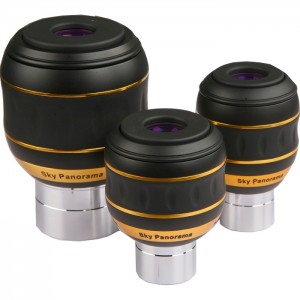
New product for 2012. Skywatcher Sky Panorama ultra wide eyepiece.
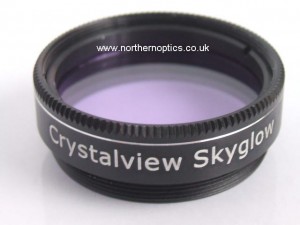
New for 2012, the Ostara 1.25″ Moon and Skyglow filter. Designed to enhance Lunar & Planetary views, as well as being a useful light pollution filter. High quality metal frame, with padded hard case. Superb value for money
Now available in 1.25″ and 2″
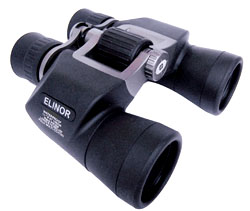
A customer visiting the Northern Optics retail outlet was looking for a good quality pair of binoculars with a wide field of view and be able to get a full field with spectacles on.
The moment the customer picked up the Ostara Elinor 8×45 binoculars , they were an instant hit. Infact he liked them so much, he was stopping other people passing by to look through them. A few other 8×42 and 10×42 binoculars were tried,. But all failed (in his opinion) to match the wide and clear view given by the Ostara porro prism design.
Ostara are a brand often overlooked, simply because some people hav,nt heard of them. This is why visiting the Northern Optics Sunday outlet is a great chance to try before you buy. Nothing beats being able to actually hold and try optics out, to make sure you make the right choice
Click HERE to see what Northern Optics currently have lined up for the next Sunday at the Waters Edge centre retail outlet. Stock levels are low, so call before setting off to avoid disappointment, as stock can change/sell out at short notice
Around 15 members turned up for the North Lincolnshire Astronomy meeting on the 4th June, 2012. The long days meant we could do some solar observing. Telescopes and binoculars used for solar were a Celestron Astromaster 70, Orion Optics newtonian, Skywatcher 150 Pro Mak, and a pair of Visionary Neoma 15×70 binoculars. Lots of Sunspots were on show, and we had some great views.
Later in the evening, we got super views of Jupiter through the scopes mentioned above, plus Skywatcher 6″ and 8″ newtonians and a nice Meade SCT were added to the line up.
Damian gave a great talk on the constellation of the month. Also Northern Optics were present on the night, giving discounts on the night + donating a pair of compact Visionary binoculars for the raffle prise
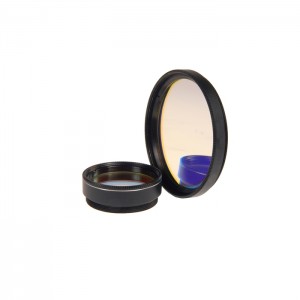
New product for 2012. Skywatcher H-Beta filter
This high performance CCD filter transmits only the Hydogen Beta emission line, and therefore is useful for greatly increasing the contrast of objects that glow in the corresponding region of the spectrum, for example the Horsehead, Cocoon and California nebulae.
| The film must be mounted flat and free of any tension – Only this will provide first class Solar images. The quality of this patent pending material is so high that any wrinkles or strain on the film will lead to a very noticeable deterioriation of optical quality. | |
| When mounted carefully, AstroSolar TM Film can reach the quality levels of truly precision polished glass plates (not to compare with several glass filters made of ordinary window glass w/o ever having seen a polishing machine). | |
| The “Cylinder” | |
| At first you have to produce a cylinder of cardboard, to exactly match the outer circumference of your Telescope tube or dew cap. In order to achieve this, cut a whole number of cardboard layers, approx. 5 -6cm (2 inches) wide. Wrap one piece of cardboard around your dew cap or lens cell and glue one end onto the other. | ![]() |
| Fasten a second and third a.s.f. layer of cardboard in the same manner, until you have manufactured a stiff roll of cardboard, approx. 4 – 5mm thick. Watch out that the finished “cylinder” will slide snuggly over the tube and that it will be easy to slide it on and off the telescope. | |
| Hint: For telescopes with smaller aperture one could try to find an appropriate “poster tube” and cut off a piece of approx. 5 – 6cm length. Variations in diameter could be egalized by using adhesive felt liner or by gluing Kork pads into the paper tube. | |
| The “Filter Cell” | |
| Cut out two rings of cardboard (each having 1 – 2mm thickness). The outer diameter of the ring – shaped cardboard should match the outer diameter of your fabricated “cylinder”. The inner diameter should correspond to the actual aperture of the instrument (some mm less may improve on image quality, due to hiding sunken edges on imported objective lenses). | |
| After having prepared two such rings, both should be equipped on adjacent sides with a large number of small cutouts of double tape along the outer circumference of both rings. Now comes the tricky part – how to get the Solar film onto the taped ring w/o wrinkles or ripples. The film must not be scratched – so put one sheet only of Kleenex (or other soft tissue) onto a flat table. Tape the Kleenex onto the table so that this part is streched out evently and cannot move on you. Only now put a square piece of film – (precut to the size of the cardboard-rings) onto the piece of soft tissue. Do not tape the film and do not strech it! Just let it rest relaxed and flat on the Kleenex. | ![]() |
![]() |
Now take the first cardboard ring and lower it straight down onto the film until every double tape clipping made contact with the film. Turn this package around, tape the other ring onto the opposite side and cut away the overleaf. Now your AstroSolar TM film should be mounted free from strain and wrinkles between the two cardboard rings. Finally glue this “filter holder” onto the prefabricated “Cylinder”. Now your “Do it Yourself” filter is ready. Enjoy it – you just saved about US$ 100 – for the filter cell alone. |
| When covering a larger Newtonian or Schmidt-Cassegrain Telescope for Solar Observation, then “Less may be More”! It not necessarily is better to make a filter as large as the telescope aperture itselve. The bigger aperture may be compromized by air turbulence and secondary mirror obstruction. It can be sufficient to produce an “off axis filter cell”, to observe the sun with a smaller telescope, wereby an ordinary reflecting telescope may improve in sharpness and definition to the level of a good refractor. | ![]() |
| Please observe the following safety precautions with EVERY solar observation | |
| 1. Prior to each and every solar observation session, check the filters fit and – if necessary – tape it to prevent slipping. Never use the filter at the eyepiece, only attach it onto the front of the objective, in front of the Schmidt-plate (SC-owners) or in front of the tube of a Newtonian-telescope. Otherwise it can become dangerously hot inside your instrument and inside your eyes. | |
| 2.If you use a binocular, protect both objectives with a filter. Also make sure, that the viewfinder of your telescope is properly covered, either with foil or with the original dust cover. Unprotected views through your finderscope would have the same catastrophic consequences for your eyes as a look through the main telescope itself! | |
| 3. A filter made of foil is relatively resistant to breackage in comparison to a glas filter. However, care should be taken with sharp pointed objects. | |
| 4. Emphasize the importance of caution to those observing with you, especially children. Intentionally removing or damaging the filter can endanger their eyesight. This is no place for jokes. Never leave the telescope outside unattended during the daytime! | |
Buy the Baader A4 solar film here
On the 19th May 2012, we had the first views of the Moorhen chicks in the lake nearest to the visitor centre at the Waters Edge country park. A grand total of 8 were counted, and all looked fit and healthy. Here,s hoping they all see it through the next few weeks.
The new Helios Solana are a traditional porro prism design. A good range of models are available to cope with different hobbies. 8×40 for birdwatching, 7×50 and 10×50 for astronomy, and 12×50 and 16×50 for the plane / ship spotters.
A range of high quality, well constructed porro prism binoculars finished in attractive, black rubber armouring. Knurled rubber finger grips ensure they are secure and comfortable to hold. All models feature quality BK-7 prisms and all optical surfaces are fully coated, providing very good optical performance. Overall these binoculars offer construction and performance which belie their modest prices. All models are fitted with a tripod adaptor bush and supplied with neck strap and soft case. Eye relief as follows: 8×40 (10mm), 7×50 (12mm), 10×50 (10mm), 12×50 (9mm), 16×50 (7mm). Colour/Material: Black Rubber
Click here to buy and to see full specs & prices
The new Helios Rapide 8×32 feature an attractive double hinge design. Priced at only £49.99 (at the time of release) they are aimed at the budget market. Don’t let the “budget” quote put you off. As you can see from the detailed description below, they are packed with modern features
Mid-size ‘take-anywhere’ binoculars ideal for a nature observation and general outdoor viewing, even in wet weather conditions. Sleek and extremely stylish, finished in high quality black rubber armouring. Providing very good optical performance, they feature fully multi-coated optics, high quality BK-7 prisms and a wide 7.2 degree field of view. The modern open-bridge design ensures they are lightweight and convenient to carry. Twist-up eye cups for spectacle wearers with eye relief of 14mm. Nitrogen filled and O-ring sealed for waterproof and fog proof protection. Supplied in soft carrying case with neck strap.
| Specification | 8×32 |
| Magnification | x8 |
| Object Lens Diameter | 32mm |
| Field of view | 7.2 degrees |
| Weight | 450g |
| Length | 128mm |
| Actual Field of View | 126M @ 1000M |
| Multi-coated Optics | Yes |
| Nearest Focus Distance | 4.5M |
The Ostara 2″ (50.8mm) Moon / Skyglow filter has been featured in the latest gear page of the BBC Sky at Night Magazine (June 2012 edition)
This is a great value for money filter, that will help give you improved views of the Moon and brighter planets + is a useful light pollution filter