How to connect an SLR or DSLR body to a Celestron SCT telescope

celestron-sct-93633-a-t-adapter-adapter-t-ring-bundle-northern_optics

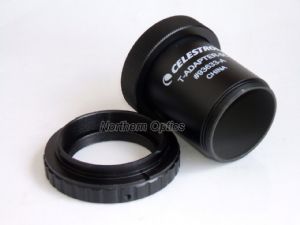
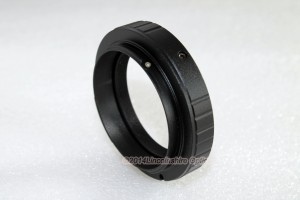
To connect your SLR or DSLR camera body to a Celestron SCT telescope you will need a Celestron #93633-A t-adapter + a compatible t-ring. To attach to the telescope, simply remove the visual back from the OTA and replace with the T-adapter. Then screw the t-ring on to this..You can then attach the DSLR camera body to the t-ring in the same way as a camera lens.

As no eyepiece is used, this is what we call prime focus photography , and is the preferred choice of most imagers

SCT t-adapter / t-ring bundles can be purchased  HERE from Northern Optics
 

Posted in Hints and Tips | Tagged | Comments Off on How to connect an SLR or DSLR body to a Celestron SCT telescope

Which T-ring or T2 mount for Olympus SLR and DSLR cameras

IMG_7080

Unlike Nikon for example who have kept the same t-rings  for many of their current DSLR cameras, Olympus have a range, that have changed over the years. So you need to be sure you are buying the right one. Hopefully this guide will help

For older film cameras such as the OM-1 , OM-2 etc you will need the standard Olympus mount that is still readily available

As Olympus turned digital, the 4/3 mount was introduced to work with modern crop sensor cameras. Though the older OM lenses can still be used. The 4/3 t-rings are designed for cameras such as the Olympus E-500 , E-510, E-520 etc

Lastly as the current range of Olympus compact DSLR cameras, you need the micro 4/3. This compact design means it will not work with older lenses. As well as the current range of Olympus cameras, Micro 4/3 also work with many Panasonic cameras. If in doubt, ask your local dealer for advice

T-rings, T2 mount can be purchased from Northern Optics HERE


Posted in Hints and Tips | Tagged , | Comments Off on Which T-ring or T2 mount for Olympus SLR and DSLR cameras

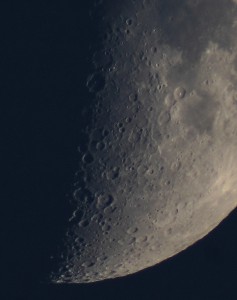
Moon image through Tal 4 inch refractor by Northern Optics. 18th November 2015

moon 18.11.15b

The image of the Moon to the right was taken by Northern Optics using a Canon 1100d prime focus through a Tal 4″ refractor ..Rather than use stacking software, I took a series of images in RAW file and picked out the best.

The image was taken at dusk, using about 80th second at 100 ISO. Images were sharpened in Digital photo professional, where curves were also adjusted to darken the background sky and to bring out more surface detail. The stamp tool was used to remove dust bunnies

The image was finally cropped to get a more close up view

Posted in Images | Tagged , , | Comments Off on Moon image through Tal 4 inch refractor by Northern Optics. 18th November 2015

Celestron Travelscope-70 image of the Double cluster

double_cluster_northern_optics_061115

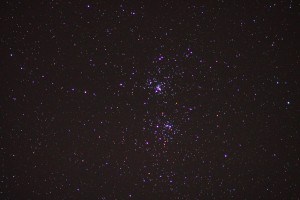
The image of the famous Perseus Double cluster to the right was taken by Northern Optics using a Celestron Travelscope-70 prime focus with  a Canon 1100D.

Expsoure was 10 seconds at 6400 ISO with the Travelscope-70 on a driven Skywatcher HEQ5 mount. A combination of light pollution and a mount not properly polar aligned were the two main factors for keeping the exposure relatively shirt to reduce star trailing and noise

But for such a low cost astro photography set up I think you will agree the results are good. Focus was done with magnified live view. 10 seconds is plenty of exposure time to show faint stars with a multitude of colours

Posted in Hawke Binocular Reviews | Tagged , | Comments Off on Celestron Travelscope-70 image of the Double cluster

North Lincs Astro meeting. Monday 2nd November 2015

orion

The North Lincolnshire astronomy society met at the Far Ings nature reserve on Monday 2nd November 2015 , where Paul Cotton gave an excellent talk called “seeing colours in the Night sky”..Excuse the pun, but this shed a light on the inner working of the eye and how different wavelengths are converted to colour, and the various parts of the outer and inner eye.

This was backed up by some images of well known astronomical targets which show various amounts of colours when seen with the naked eye or a telescope

Due to the foggy conditions, a few members did not risk the tricky driving conditions. But despite this, 16 regular members attended

For more info on the North Lincs astronomy society click HERE

Posted in News and Blog | Comments Off on North Lincs Astro meeting. Monday 2nd November 2015

Celestron Travelscope-70 image of the Andromeda Galaxy. 19.10.15

andromeda_celestron_travelscope_70_Northern_Optics 19.10.15a

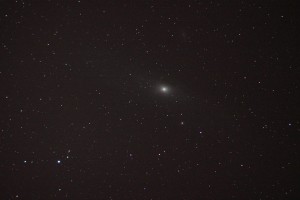
The image to the right of the Andromeda Galaxy was taken using a Canon 1100D , prime focus through a Celestron Travelscope-70. This equates to a 400mm f5.7 telephoto lens.

This image proves that basic astro photography can be achieved with an inexpensive telescope. Exposure was 10 seconds at 6400 ISO. Mounted on a driven Skywatcher HEQ5.


I did try longer exposure, but this brought out more orange skyglow. Using Canons own Digital photo professional software I was able to use the curves to darken the background sky..I could have pushed this further, but then lost detail in M31. There is some slight evidence of dust lanes, and the nearby satellite galaxy M32 is just visible to the North.

Stacking software such as DSS  (deep space stacker) would help bring out more detail. But I prefer to show what is possible with a single exposure.

The travelscope-70 can be purchased HERE from Northern Optics, with the option of t-ring bundles. After sales advise is also included in the price. This telescope is an ideal starter scope for both visual and photographic needs. Though for photography, we recommend a sturdier mount, and for longer exposure astro photography a driven EQ mount is recommended

Posted in Celestron Spotting Scopes Reviews, Hints and Tips | Tagged , , | Comments Off on Celestron Travelscope-70 image of the Andromeda Galaxy. 19.10.15

North Lincs astro meeting. Monday 5th October 2015

jupiter

The North Lincolnshire astronomy society gathered at the usual venue at Far ings nature reserve at Barton Upon Humber for the yearly AGM. Around 18 members attended.

The North Lincs astro website can be found HERE

This was followed by Charles Thody kindly standing in at the last minute to give us an excellent talk on basic photography through a DSLR camera. His useful and informative talk gave us all an insight into astro imaging, and no doubt inspired us all to get our cameras out when we returned home

Thanks to Sarah as always for the refreshments and the Lincolnshire wildlife trust for the use of the venue

Posted in News and Blog | Tagged | Comments Off on North Lincs astro meeting. Monday 5th October 2015

What are auto focus binoculars

750 FF2

Often you will hear the phrase or see in advertising the mention of auto focus binoculars. So what are auto focus binoculars ?

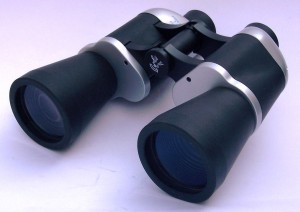
I,m afraid to the best of my knowledge there is no such thing as auto focus. This is a very misleading claim by some manufacturers and sellers. They are in fact fixed focus. In other words they are fixed at around 50-100 yards. Often you will see fixed focus binoculars in the 7×50 range. 7×50 is the most popular fixed focus choice due to their large depth of field. So for example if they are pre-focused at 50 yards, they will show everything in focus from around 30 yards to infinity. They will be OK, but you will not get precise focus throughout the range

To some people , due to restricting disabilities , injury etc a fixed focus set will be ideal, with no focus wheel to turn. But with many sets now coming with less than half a turn of the focus wheel available, there are much better options for most people.

Image upper right shows a pair of focus free 7×50 binoculars. Note there is no focus wheel


Posted in User Guides and Tutorials | Tagged | Comments Off on What are auto focus binoculars

Fotomate tripods. First impressions

pm5

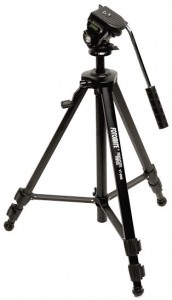
At the Northern Optics weekend outlet at Barton Upon Humber, the new Fotomate tripods were an instant hit on their first appearance. One customer went for the VP-106 due to its compact and lightweight design. Perfect for travelling by plane with its weight restriction. Value for money was also a major factor at only £29.00 with a case included.

A second customer was looking for a larger tripod to hold his spotting scope. He chose the VT-5006 version. Although this is a more sturdy tripod, the main reason for picking this compared to the VP-106 was a silky smooth and fluid head. Perfect for panning the scenery. Just like the first customer, value for money was mentioned.

The full range of the new fotomate tripods can be purchased HERE mail order. Or a small selection may be on display at our weekend outlet for you to try. Call to find out which are in stock, as well as other brands that may be available

Image upper right shows the VT-6006 version


Posted in Tripods and Mounts | Tagged , , | Comments Off on Fotomate tripods. First impressions

View through a Celestron Starpointer Pro #51635

star_pointer_pro_4_northern_optics

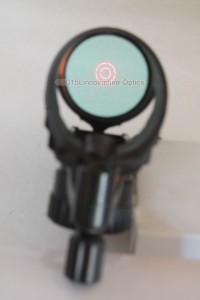
The image to the right shows what you see through the new Celestron Starpointer Pro. What you get is a clear double illuminated pair of red circles..The brightness of this can be adjusted.

In our opinion the new Starpointer Pro is a massive improvement on many single dot finders on the market, and excellent value when compared to the current range of similar spec finders with illuminated circles.

An added feature is its compatibility..Not only does it come with a dovetail mount for connection to many Skywatcher telescopes, it also comes with SCT fittings and double hole connection to many budget telescopes.

The zero magnification projection will make for fast and accurate centering  of many astronomical targets

Available to purchase HERE from Northern Optics


Posted in Accessories | Tagged , | Comments Off on View through a Celestron Starpointer Pro #51635